 Demande devis
 Track-suivi des commandes
 Besoin d’aide

 Mon panier
0
Mon panier
0
shopping_cart
0
Du lundi au jeudi de 9h00-12h30/13h30-18h00 - Le vendredi de 9h00-12h30/13h30-16h30
 Tel : 01 00 00 00 00
-
 search
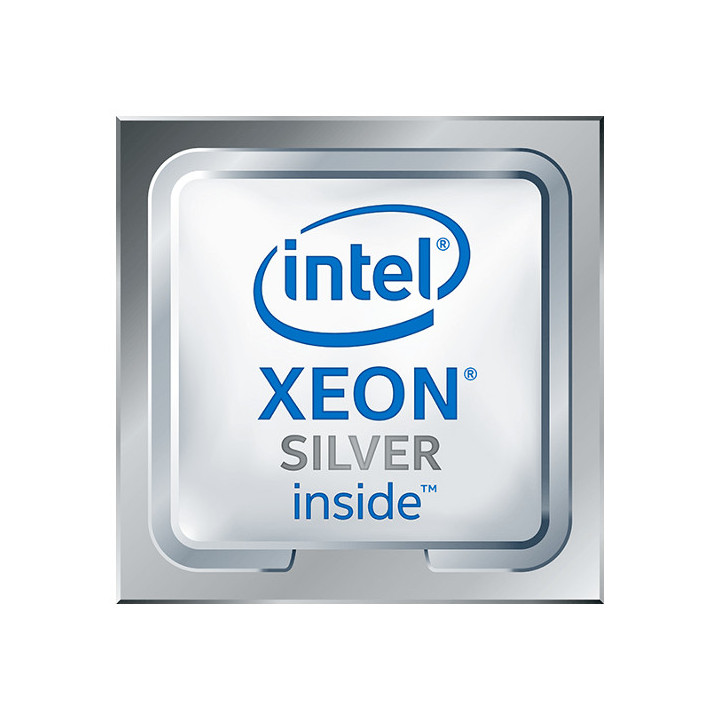
Lenovo Xeon 4214R processeur 2,4 GHz 16,5 Mo Plateau
EAN : 889488507870
Référence : 5706970
Lenovo Xeon 4214R, Intel® Xeon® Silver, LGA 3647 (Socket P), 14 nm, Plateau, 4214R, 2,4 GHz
1 430,00 €
HT
1 430,00 € TTC
Intel® Turbo Boost Technology
Intel® Turbo Boost Technology dynamically increases the processor's frequency as needed by taking advantage of thermal and power headroom to give you a burst of speed when you need it, and increased energy efficiency when you don’t.
Intel® vPro™ Platform Eligibility
Intel® vPro™ Technology is a set of security and manageability capabilities built into the processor aimed at addressing four critical areas of IT security: 1) Threat management, including protection from rootkits, viruses, and malware 2) Identity and web site access point protection 3) Confidential personal and business data protection 4) Remote and local monitoring, remediation, and repair of PCs and workstations.
Intel® Hyper-Threading Technology
Intel® Hyper-Threading Technology (Intel® HT Technology) delivers two processing threads per physical core. Highly threaded applications can get more work done in parallel, completing tasks sooner.
Intel® Virtualization Technology (VT-x)
Intel® Virtualization Technology (VT-x) allows one hardware platform to function as multiple “virtual” platforms. It offers improved manageability by limiting downtime and maintaining productivity by isolating computing activities into separate partitions.
Intel® Virtualization Technology for Directed I/O (VT-d)
Intel® Virtualization Technology for Directed I/O (VT-d) continues from the existing support for IA-32 (VT-x) and Itanium® processor (VT-i) virtualization adding new support for I/O-device virtualization. Intel VT-d can help end users improve security and reliability of the systems and also improve performance of I/O devices in virtualized environments.
Intel® VT-x with Extended Page Tables (EPT)
Intel® VT-x with Extended Page Tables (EPT), also known as Second Level Address Translation (SLAT), provides acceleration for memory intensive virtualized applications. Extended Page Tables in Intel® Virtualization Technology platforms reduces the memory and power overhead costs and increases battery life through hardware optimization of page table management.
Intel® 64
Intel® 64 architecture delivers 64-bit computing on server, workstation, desktop and mobile platforms when combined with supporting software.¹ Intel 64 architecture improves performance by allowing systems to address more than 4 GB of both virtual and physical memory.
Instruction Set
An instruction set refers to the basic set of commands and instructions that a microprocessor understands and can carry out. The value shown represents which Intel’s instruction set this processor is compatible with.
Instruction Set Extensions
Instruction Set Extensions are additional instructions which can increase performance when the same operations are performed on multiple data objects. These can include SSE (Streaming SIMD Extensions) and AVX (Advanced Vector Extensions).
# of AVX-512 FMA Units
Intel® Advanced Vector Extensions 512 (AVX-512), new instruction set extensions, delivering ultra-wide (512-bit) vector operations capabilities, with up to 2 FMAs (Fused Multiply Add instructions), to accelerate performance for your most demanding computational tasks.
Enhanced Intel SpeedStep® Technology
Enhanced Intel SpeedStep® Technology is an advanced means of enabling high performance while meeting the power-conservation needs of mobile systems. Conventional Intel SpeedStep® Technology switches both voltage and frequency in tandem between high and low levels in response to processor load. Enhanced Intel SpeedStep® Technology builds upon that architecture using design strategies such as Separation between Voltage and Frequency Changes, and Clock Partitioning and Recovery.
Intel® Speed Shift Technology
Intel® Speed Shift Technology uses hardware-controlled P-states to deliver dramatically quicker responsiveness with single-threaded, transient (short duration) workloads, such as web browsing, by allowing the processor to more quickly select its best operating frequency and voltage for optimal performance and power efficiency.
Intel® Deep Learning Boost (Intel® DL Boost)
A new set of embedded processor technologies designed to accelerate AI deep learning use cases. It extends Intel AVX-512 with a new Vector Neural Network Instruction (VNNI) that significantly increases deep learning inference performance over previous generations.
Intel® Resource Director Technology (Intel® RDT)
Intel® RDT brings new levels of visibility and control over how shared resources such as last-level cache (LLC) and memory bandwidth are used by applications, virtual machines (VMs) and containers.
Intel® Volume Management Device (VMD)
Intel® Volume Management Device (VMD) provides a common, robust method of hot plug and LED management for NVMe-based solid state drives.
Intel® Turbo Boost Technology dynamically increases the processor's frequency as needed by taking advantage of thermal and power headroom to give you a burst of speed when you need it, and increased energy efficiency when you don’t.
Intel® vPro™ Platform Eligibility
Intel® vPro™ Technology is a set of security and manageability capabilities built into the processor aimed at addressing four critical areas of IT security: 1) Threat management, including protection from rootkits, viruses, and malware 2) Identity and web site access point protection 3) Confidential personal and business data protection 4) Remote and local monitoring, remediation, and repair of PCs and workstations.
Intel® Hyper-Threading Technology
Intel® Hyper-Threading Technology (Intel® HT Technology) delivers two processing threads per physical core. Highly threaded applications can get more work done in parallel, completing tasks sooner.
Intel® Virtualization Technology (VT-x)
Intel® Virtualization Technology (VT-x) allows one hardware platform to function as multiple “virtual” platforms. It offers improved manageability by limiting downtime and maintaining productivity by isolating computing activities into separate partitions.
Intel® Virtualization Technology for Directed I/O (VT-d)
Intel® Virtualization Technology for Directed I/O (VT-d) continues from the existing support for IA-32 (VT-x) and Itanium® processor (VT-i) virtualization adding new support for I/O-device virtualization. Intel VT-d can help end users improve security and reliability of the systems and also improve performance of I/O devices in virtualized environments.
Intel® VT-x with Extended Page Tables (EPT)
Intel® VT-x with Extended Page Tables (EPT), also known as Second Level Address Translation (SLAT), provides acceleration for memory intensive virtualized applications. Extended Page Tables in Intel® Virtualization Technology platforms reduces the memory and power overhead costs and increases battery life through hardware optimization of page table management.
Intel® 64
Intel® 64 architecture delivers 64-bit computing on server, workstation, desktop and mobile platforms when combined with supporting software.¹ Intel 64 architecture improves performance by allowing systems to address more than 4 GB of both virtual and physical memory.
Instruction Set
An instruction set refers to the basic set of commands and instructions that a microprocessor understands and can carry out. The value shown represents which Intel’s instruction set this processor is compatible with.
Instruction Set Extensions
Instruction Set Extensions are additional instructions which can increase performance when the same operations are performed on multiple data objects. These can include SSE (Streaming SIMD Extensions) and AVX (Advanced Vector Extensions).
# of AVX-512 FMA Units
Intel® Advanced Vector Extensions 512 (AVX-512), new instruction set extensions, delivering ultra-wide (512-bit) vector operations capabilities, with up to 2 FMAs (Fused Multiply Add instructions), to accelerate performance for your most demanding computational tasks.
Enhanced Intel SpeedStep® Technology
Enhanced Intel SpeedStep® Technology is an advanced means of enabling high performance while meeting the power-conservation needs of mobile systems. Conventional Intel SpeedStep® Technology switches both voltage and frequency in tandem between high and low levels in response to processor load. Enhanced Intel SpeedStep® Technology builds upon that architecture using design strategies such as Separation between Voltage and Frequency Changes, and Clock Partitioning and Recovery.
Intel® Speed Shift Technology
Intel® Speed Shift Technology uses hardware-controlled P-states to deliver dramatically quicker responsiveness with single-threaded, transient (short duration) workloads, such as web browsing, by allowing the processor to more quickly select its best operating frequency and voltage for optimal performance and power efficiency.
Intel® Deep Learning Boost (Intel® DL Boost)
A new set of embedded processor technologies designed to accelerate AI deep learning use cases. It extends Intel AVX-512 with a new Vector Neural Network Instruction (VNNI) that significantly increases deep learning inference performance over previous generations.
Intel® Resource Director Technology (Intel® RDT)
Intel® RDT brings new levels of visibility and control over how shared resources such as last-level cache (LLC) and memory bandwidth are used by applications, virtual machines (VMs) and containers.
Intel® Volume Management Device (VMD)
Intel® Volume Management Device (VMD) provides a common, robust method of hot plug and LED management for NVMe-based solid state drives.
-
Marque

-
Référence5706970
-
EAN13889488507870
-
ID ARK du processeur197100
-
Vitesses d'horloge de mémoire prises en charge par le processeur2400 MHz
-
Types de mémoires pris en charge par le processeurDDR4-SDRAM
-
Mémoire interne maximum prise en charge par le processeur1,02 To
-
ECCOui
-
Unités FMA (Fused Multiply-Add) AVX-5121
-
Technologie Intel® Turbo Boost2.0
-
Évolutivité2S
-
Révision CEM PCI Express3.0
-
Taille de l'emballage du processeur76.0 x 56.5 cm
-
Code du système harmonisé85423119
-
Canaux de mémoireCanal Hexa
-
Technologie 3.0 Intel® Turbo Boost MaxNon
-
Carte graphique intégréeNon
-
Intel® Speed Select technology - Profil de performances (Intel® SST-PP)Non
-
Intel® Optane™ DC Persistent Memory SupportedNon
-
Intel® Speed Select Technology - Base Frequency (Intel® SST-BF)Non
-
Intel® VT-x avec Extended Page Tables (EPT)Oui
-
Bit de verrouillageOui
-
Technologie Intel® Virtualization Technology pour les E/S dirigées (VT-d)Oui
-
Technologie Trusted Execution d'Intel®Oui
-
Intel® Deep Learning Boost (Intel® DL Boost) on CPUOui
-
Technologie de vitalisation d'Intel® (VT-x)Oui
-
Intel® Volume Management Device (VMD)Oui
-
Les options intégrées disponiblesOui
-
Nouvelles instructions Intel® AES (Intel® AES-NI)Oui
-
Intel® 64Oui
-
Intel® vPro™ Platform EligibilityOui
-
Technologie SpeedStep évoluée d'IntelOui
-
Technologie Intel® Hyper Threading (Intel® HT Technology)Oui
-
Type d'emballagePlateau
-
Set d'instructions pris en chargeSSE4.2, AVX, AVX 2.0, AVX-512
-
Version des emplacements PCI Express3.0
-
Nombre maximum de voies PCI Express48
-
Tcase79 °C
-
Enveloppe thermique (TDP, Thermal Design Power)100 W
-
Nom de code du processeurCascade Lake
-
Lithographie du processeur14 nm
-
Modes de fonctionnement du processeur64-bit
-
Segment de marchéServeur
-
Mémoire cache du processeur16,5 Mo
-
Socket de processeur (réceptable de processeur)LGA 3647 (Socket P)
-
Modèle d'adaptateur graphique discrêtIndisponible
-
Modèle d'adaptateur graphique à bordIndisponible
-
Technologie Speed Shift d'Intel®Oui
-
Fréquence du processeur Turbo3,5 GHz
-
Nombre de threads du processeur24
-
Nombre de coeurs de processeurs12
-
Modèle de processeur4214R
-
Génération de processeursIntel® Xeon® Scalable de 2nd génération
-
Refroidisseur inclusNo
Non -
BoîteNo
Non -
Adaptateur graphiqueNo
Non -
Fréquence de base du processeur2,4 GHz
-
composant pourServer/workstation
Serveur/Station de travail -
Famille de processeurIntel Xeon Silver
Intel® Xeon® Silver
Autres produits dans la même catégorie

1 382,00 €
Voir détails
1 361,81 €
Voir détails
5 148,00 €
Voir détails
465,15 €
Voir détails
1 014,00 €
Voir détails